PopTech Blog
On World Cancer Day, we're highlighting the PopTech 2010 talk from Pulitzer Prize winning author Dr. Siddhartha Mukherjee. His book, The Emperor of All Maladies: A Biography of Cancer, and his stage talk explore the history of a disease that one out of every three women and one out of every two men will develop in their lifetime.
This week in PopTech: OK, here we Go

There's always something brewing in the PopTech community. From the world-changing people, projects and ideas in our network, a handful of this week's highlights follows.
- PopTech is heading to Africa! This February 7-11, 2012, we will be hosting our Climate Resilience Lab in Nairobi, Kenya. The Lab will bring together a carefully chosen network of climate researchers, gender experts, social innovators, technologists, designers, and community champions, to explore new possibilities in this domain. Our goal is to move “beyond the white paper” to identify and collaborate on high-potential new approaches that can be tested, scaled, and implemented. Follow along with #poptechlabs.
- Nominations are now open for our 2012 Class of Social Innovation Fellows. Check out the Call for Nominations to help spark your thinking. Our alumni from the classes of 2008, 2009, 2010 and 2011 also offer great examples of changemakers putting new ideas into action. If you or someone you know is a great fit, head to poptech.org/nominate and submit a nomination. Get it done soon: nominations close this year on April 3, 2012.
- We are thrilled to announce that our Hot Studio designed World Rebalancing iPad app has won an Interactive Media Award for Outstanding Achievement! Haven't had a chance to check it out? Download it for free.
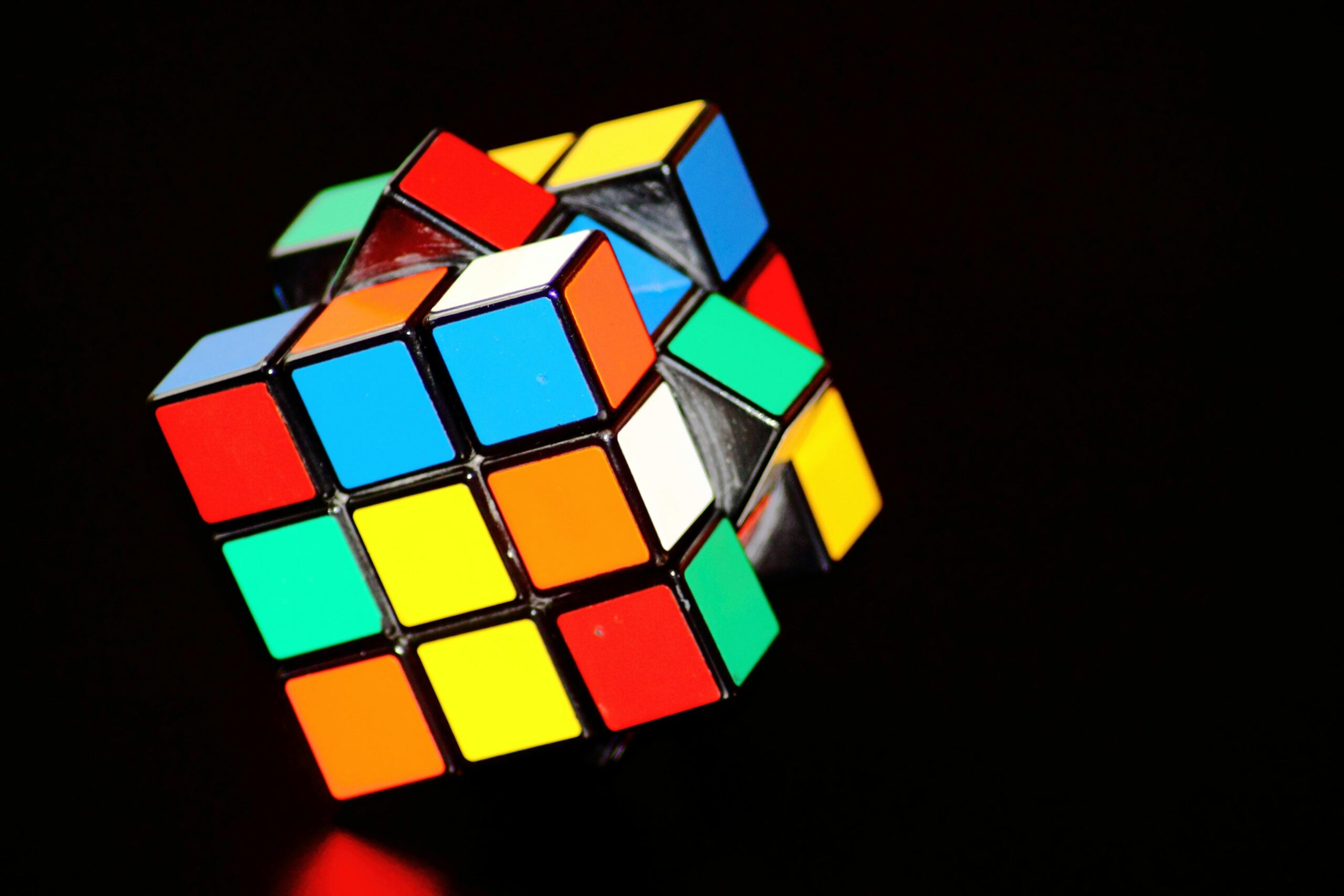
- Enough about us! How about some pure, unadulterated entertainment for this Friday afternoon. For the kids (or kids at heart) watch OK Go (PopTech 2010), together with Sesame Street teach young viewers about primary colors in stop mo' OK Go style. For the rest of us, the boys have something up their sleeve for the Super Bowl as well; this teaser alludes to a giant car-powered, pianola-style music sequencer. Looks like fun.
If you'd like to receive a stream of these updates (and more) throughout the week in real time, follow us on Twitter, Tumblr, Facebook, sign up for our newsletter, and subscribe to the PopTech blog.
Image: Peter Durand
#IAmScience: The stories behind scientists
If the word "scientist" conjures a near-sighted nerd in a lab coat, you may be spending too many late nights watching the SyFy channel. A recent movement on Twitter using the hashtag #iamscience is enabling scientists from all over the world to share their pictures, tell their stories, and show off their particular science to the world at large.
Inspired by a post by science writer and marine biologist Kevin Zelnio written after he attended the Science Online Conference, the hashtag has been a fascinating way to learn the varied backgrounds of people who now make their careers in the sciences; people who were homeless as teens, became interested in science when a friend got sick and are now working on a cure, or as kids who performed stress-tests with tarantulas on their arachnophobic dads.
In its short existence, the movement has already grown beyond a hashtag: there's now a Storify page, a music video and Tumblr logs of both archived tweets and stories and pictures of cool scientists doing cool things.
In the often self-serving and solipsistic world of social media, it's refreshing to see real stories being told and real connections being made through sharing experiences. Student neuroscientist and self-described science geek @katiesci tweeted "We are a bunch of misfits who found what we love." As #iamscience demonstrates, sometimes when you whisper into an echo chamber, a thousand voices answer back.
Image via This is What a Scientist Looks Like
Nominations now open for 2012 PopTech Social Innovation Fellows

How do we encourage resilience in the face of the world’s many challenges? PopTech’s major focus in 2012 centers on that very question. And some of the best new solutions we’ve seen have come directly from social innovators, visionaries on the front lines of social change. Now is your chance to help speed up their impact, by nominating candidates for the PopTech Social Innovation Fellows program.
Fellows are invited to Maine in October for a five-day training, immediately followed by an opportunity to attend and present at the PopTech conference. They gain new skills and broad exposure, and benefit by connecting with the program’s faculty and the larger PopTech network. Our primary goal with the Fellows program: to enable these emerging leaders to reach real, wide, sustainable impact as quickly as possible.
Check out the Call for Nominations to help spark your thinking. Our alumni from the classes of 2008, 2009, 2010 and 2011 also offer great examples of changemakers putting new ideas into action: a mushroom-based alternative to Styrofoam™, peer-to-peer education loans, a platform for sustainable food distribution, and solar systems sold like mobile phone minutes, among others.
If you or someone you know is a great fit, head to poptech.org/nominate and submit a nomination. Get it done soon: nominations close this year on April 3, 2012.
The Social Innovation Fellows program is supported by the Rita Allen Foundation, the Nike Foundation, the Doris Duke Charitable Foundation, PwC and American Express.
Image-wise: Fiber architecture

White matter fiber architecture of the brain. Measured from diffusion spectral imaging (DSI). The fibers are color-coded by direction: red = left-right, green = anterior-posterior, blue = through brain stem.
Navigate the brain in a way that was never before possible; fly through major brain pathways, compare essential circuits, zoom into a region to explore the cells that comprise it, and the functions that depend on it.
The Human Connectome Project aims to provide an unparalleled compilation of neural data, an interface to graphically navigate this data and the opportunity to achieve never before realized conclusions about the living human brain.